

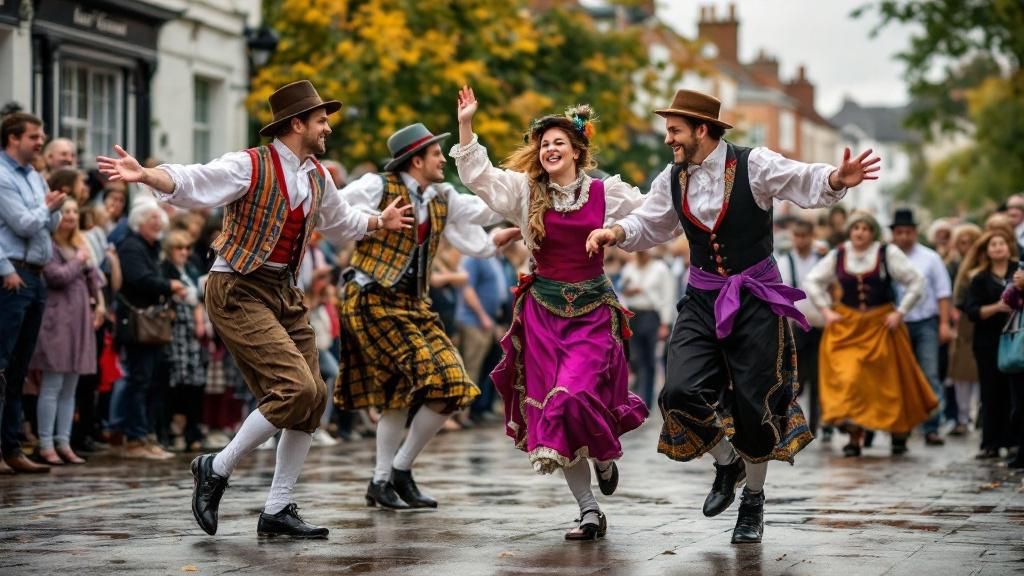
Once dismissed as a charming remnant of England’s countryside traditions, Morris dancing is witnessing an surprising resurgence amongst Britain’s younger people. From university societies to village greens, enthusiasts under the age of thirty are rediscovering the patterned movements, bell-adorned accessories, and vibrant attire that have shaped this centuries-old tradition. This article explores the forces propelling this cultural resurgence, considers how today’s practitioners are reinterpreting the style, and explores what this fresh enthusiasm reveals about modern British perspectives towards tradition and social connection.
The Cultural Resurgence of Morris Dance
The revival of Morris dancing amongst younger British communities represents a striking move from years of falling participation. What was once considered an purely rural or older pursuit has transformed into a dynamic cultural phenomenon, with student societies, urban dance groups, and community organisations genuinely championing the tradition. This revival challenges established stereotypes and demonstrates that contemporary youth genuinely appreciate safeguarding and promoting Britain’s folkloric heritage, reinvigorating practices that looked set for obscurity.
This renewed enthusiasm transcends simple nostalgic interest; emerging dancers are consciously reimagining Morris dancing for today’s world. They blend modern music, experiment with innovative choreography, and build open-minded collectives that welcome participants irrespective of background or prior experience. The movement demonstrates a broader cultural shift wherein British youth deliberately look for genuine links to their ancestral traditions whilst at the same time reshaping what tradition means, creating a living conversation between heritage fidelity and modern artistic interpretation that resonates with their generation’s values.
Why Young People Are Embracing This Time-Honoured Craft
Morris dancing’s attraction for younger generations extends far beyond nostalgic curiosity. Contemporary dancers value the art form’s deep cultural roots whilst recognising its capacity for creative expression and social connection. The ease of access to modern Morris groups, coupled with their welcoming approach, has transformed the perception of this traditionally insular pursuit. Young people are finding that Morris dancing offers a genuine alternative to standard recreational pursuits, providing both demanding physicality and genuine community engagement in an ever more digital world.
Sense of Community
In an period marked by social fragmentation, Morris dancing groups provide young people with tangible communities built upon shared values and collaborative practice. The welcoming character of contemporary Morris groups readily embraces newcomers irrespective of background or experience, fostering authentic bonds and meaningful connections. Participants frequently characterise their dancing cohorts as family units of choice, providing emotional support and belonging that stretches well beyond the performance season. This sense of community proves especially important for young people navigating the shift from education to work.
The collaborative framework of Morris dancing inherently promotes collective togetherness and shared accountability. Each dancer’s input directly influences the group’s synchronized appearance and temporal accuracy, creating mutual reliance that strengthens community ties. Many young dancers report that their Morris groups foster genuine relationships in ways that standard social spaces regularly fail to achieve. The shared commitment to preserving and evolving this established custom creates a compelling awareness of shared mission amongst participants.
Exercise and Movement and Wellbeing
Morris dancing requires considerable physical exertion, blending cardiovascular exercise with intricate movement control and muscular conditioning. Young dancers gain enhanced physical capability whilst engaging in activity that feels culturally meaningful rather than merely utilitarian. The repetitive, rhythmic character of Morris footwork provides contemplative benefits alongside physical conditioning, contributing positively to mental wellbeing. Participants commonly mention the comprehensive wellness advantages as a primary motivation for continued participation in their local Morris groups.
Beyond cardiovascular benefits, Morris dancing enhances body awareness and spatial perception and physical self-assurance, particularly valuable for young people dealing with body image issues. The emphasis on technical precision and collective synchronisation redirects focus from appearance-based concern towards competence and accomplishment. Moreover, the outdoor performance tradition associated with Morris dancing encourages participants to interact with the natural world and seasonal rhythms, enhancing psychological wellbeing through engagement with nature and tradition.
Regional Differences and Contemporary Modifications
Morris dancing traditions show substantial variation across Britain’s areas, with each locality creating unique approaches capturing community traditions and landscape. The Cotswolds uphold the robust, athletic “Cotswold” style, whilst the North West favours the highly detailed “Northwest” style featuring intricate dress and detailed arrangements. Younger dancers are eagerly taking up these area-specific traditions, attending workshops and celebrations to perfect traditional practices whilst appreciating the cultural subtleties embedded within each style. This geographical diversity gives contemporary performers with multiple entry points into Morris dancing, enabling them to engage with traditions grounded in their home regions.
Modern adaptations are concurrently broadening Morris dancing’s appeal outside traditional contexts. Younger enthusiasts integrate contemporary music, experimental choreography, and inclusive casting practices, questioning historical gender and age restrictions. Mixed-gender sides and LGBTQ+ Morris groups have emerged, fundamentally transforming the tradition’s social dynamics. These innovations preserve the essential character—rhythmic footwork, bells, and festive energy—whilst rendering the practice more approachable and relevant to contemporary participants. Such creative reinterpretation illustrates that heritage traditions need not remain static, successfully bridging historical authenticity with modern sensibilities.
The Prospects of Morris Dancing in Britain
As Morris dancing remains popular with younger audiences, the tradition stands at a critical crossroads. Contemporary dancers are deliberately transforming the form whilst maintaining its cultural heritage, bringing new dance moves and accessible methods that resonate with modern sensibilities. Universities document unprecedented enrolment in Morris societies, whilst festivals welcome exceptional participation of young participants. This momentum suggests the art form is moving beyond nostalgic curiosity to genuine cultural movement, building lasting structures for continued expansion and ongoing importance within British communities across the country.
Looking ahead, Morris dancing’s trajectory appears remarkably promising. The convergence of social media promotion, easy-to-follow learning techniques, and younger generations’ desire for authentic social cohesion creates ideal conditions for thriving. Organisations are investing in mentoring initiatives and area-based tournaments, fostering talent pipelines and facilitating knowledge sharing between experienced and novice dancers. Should this enthusiasm persist, Morris dancing may finally shed its perception as exclusively heritage-focused, instead becoming established as a lively, changing tradition that meaningfully enriches contemporary British society and strengthens communal bonds across generations.
